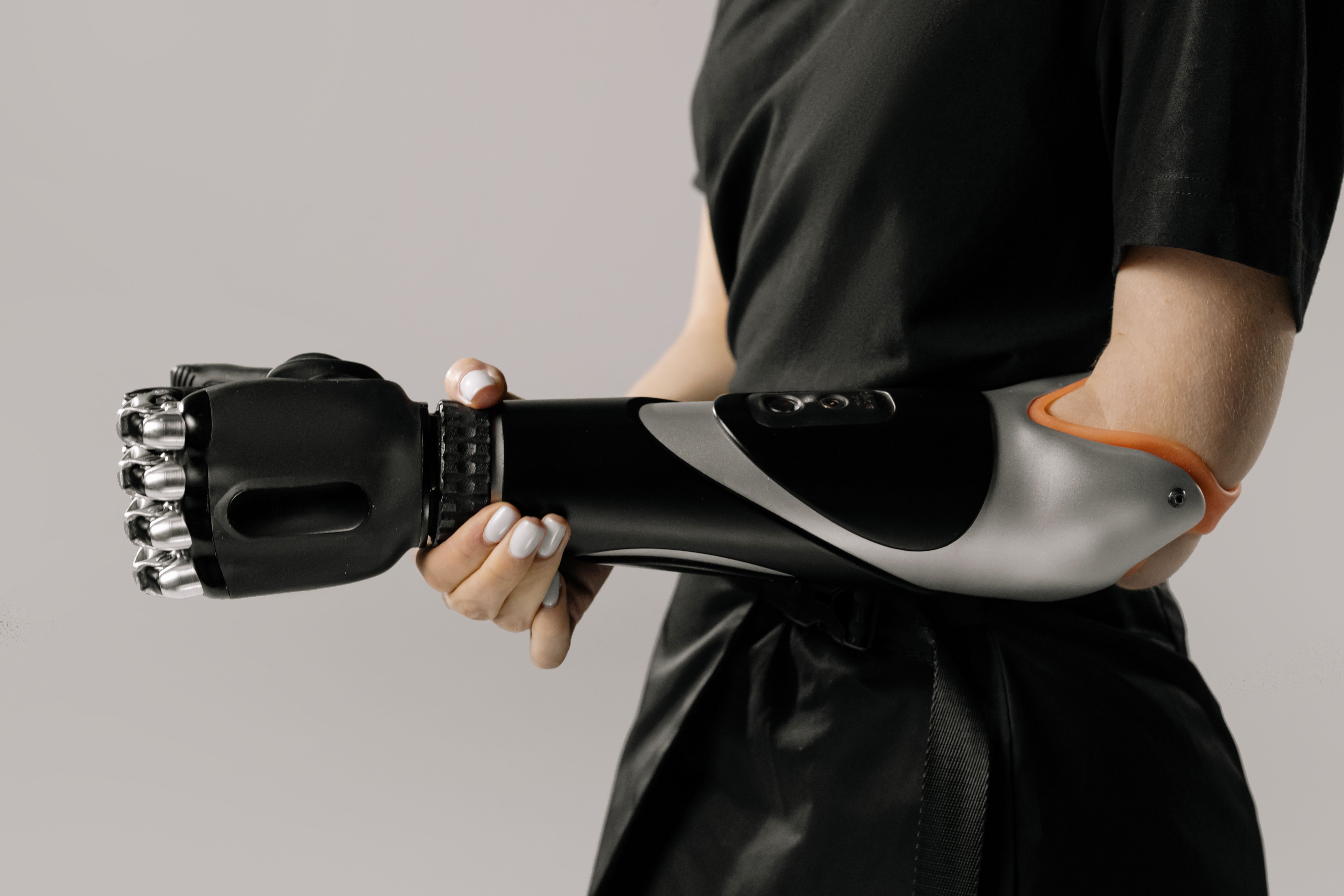
We swapped a $500 sensor for a $5 one. That is not a compromise. That is the point.
A $5 pressure sensor instead of a $500 EMG system. Two actuators instead of five. Parts anyone can source. That is not a compromise — it is the thesis.
01
Sensing
Force Sensitive Resistors under $5 each. No EMG, no electrodes, no calibration. Pressure changes when a muscle contracts. That is the signal.
Under $5 per sensor
No EMG required
Works in heat and humidity
02
Control
Independent thumb and a unified four-finger curl through one tendon. Two actuators. Pressure maps to grip speed and force — graduated, not binary.
2-actuator architecture
Tendon-driven fingers
Proportional grip
03
Repairability
Standard fasteners. No proprietary parts. 3D-printable structure. A local technician with basic tools can service the full device.
No proprietary parts
Field-serviceable
3D-printable
The number that drives every decision
Target BOM for a complete Myogen system
Commercial myoelectric hands cost $15,000 to $100,000. Ours will cost under $250. Every engineering decision is measured against that number. If we miss it, the whole point falls apart.
Myogen
© 2026 Myogen